Hisense 85″ U8 Series Mini-LED 4K Google TV Review
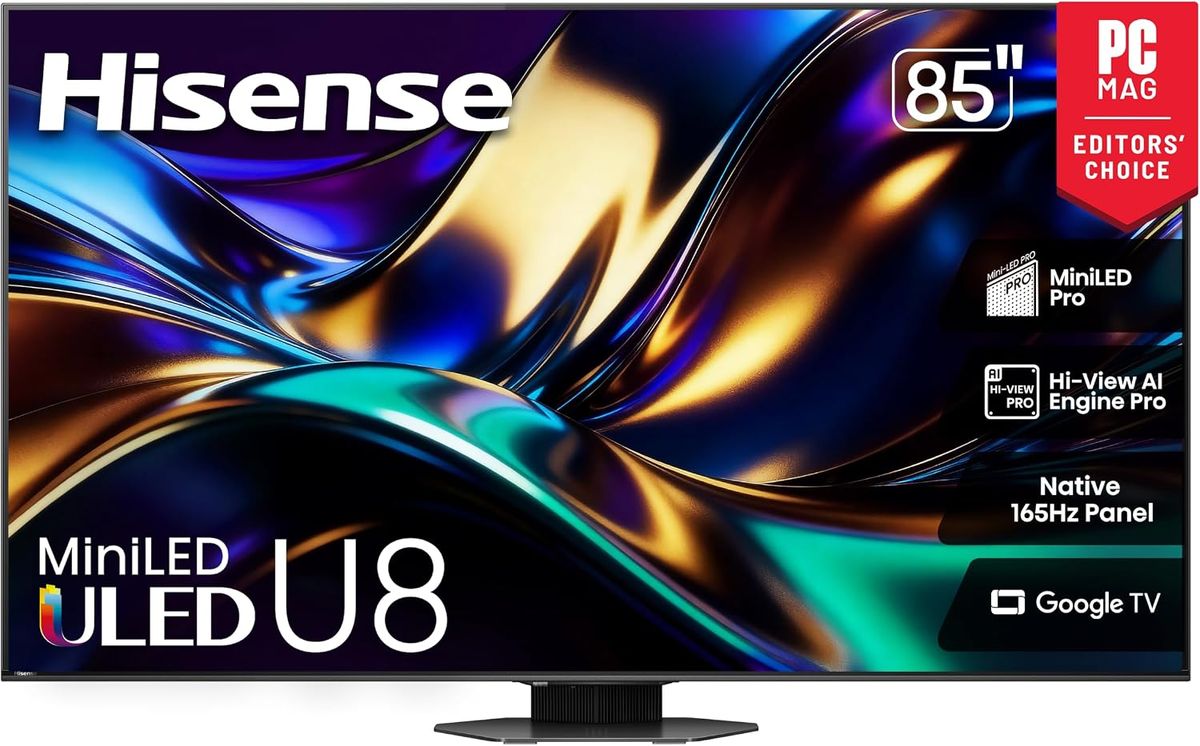
I spend my days managing network infrastructure and endpoint deployments for a mid-sized firm, so I tend to look at consumer electronics the same way I look at enterprise hardware: what does it actually do, how long will it last, and is the price justified by the specs? When friends and family ask me for TV recommendations, they usually get a spreadsheet-level breakdown rather than a sales pitch. So when I started digging into the Hisense 85″ U8 Series ULED Mini-LED 4K UHD Smart Google TV (85U8QG), I approached it the way I’d approach any major purchase: ignore the marketing gloss, read the spec sheet, and figure out where the real value sits.
Short version: this is a lot of television for the money, and the numbers back it up. Let me walk through what matters.
Why Mini-LED and ULED Matter More Than You Think
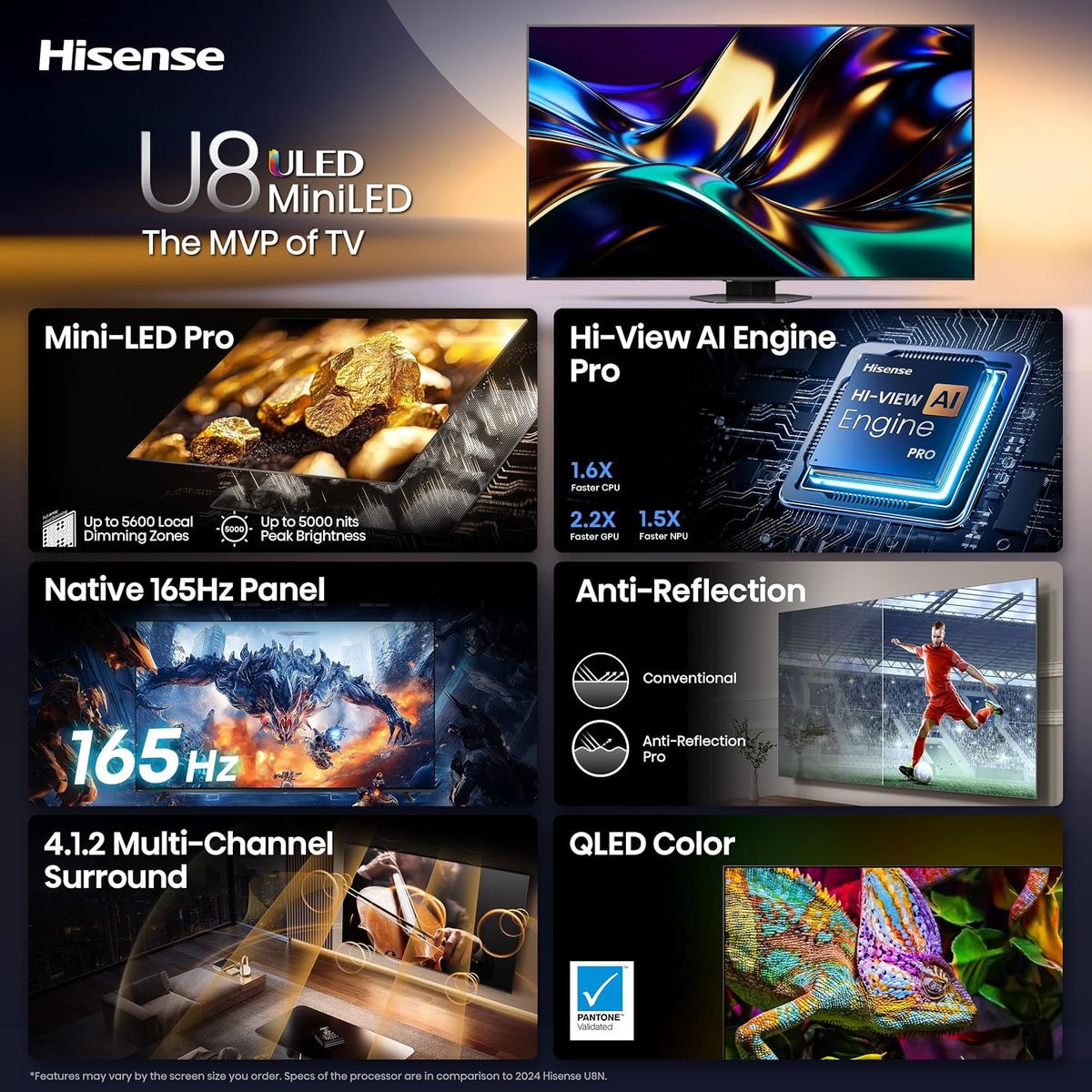
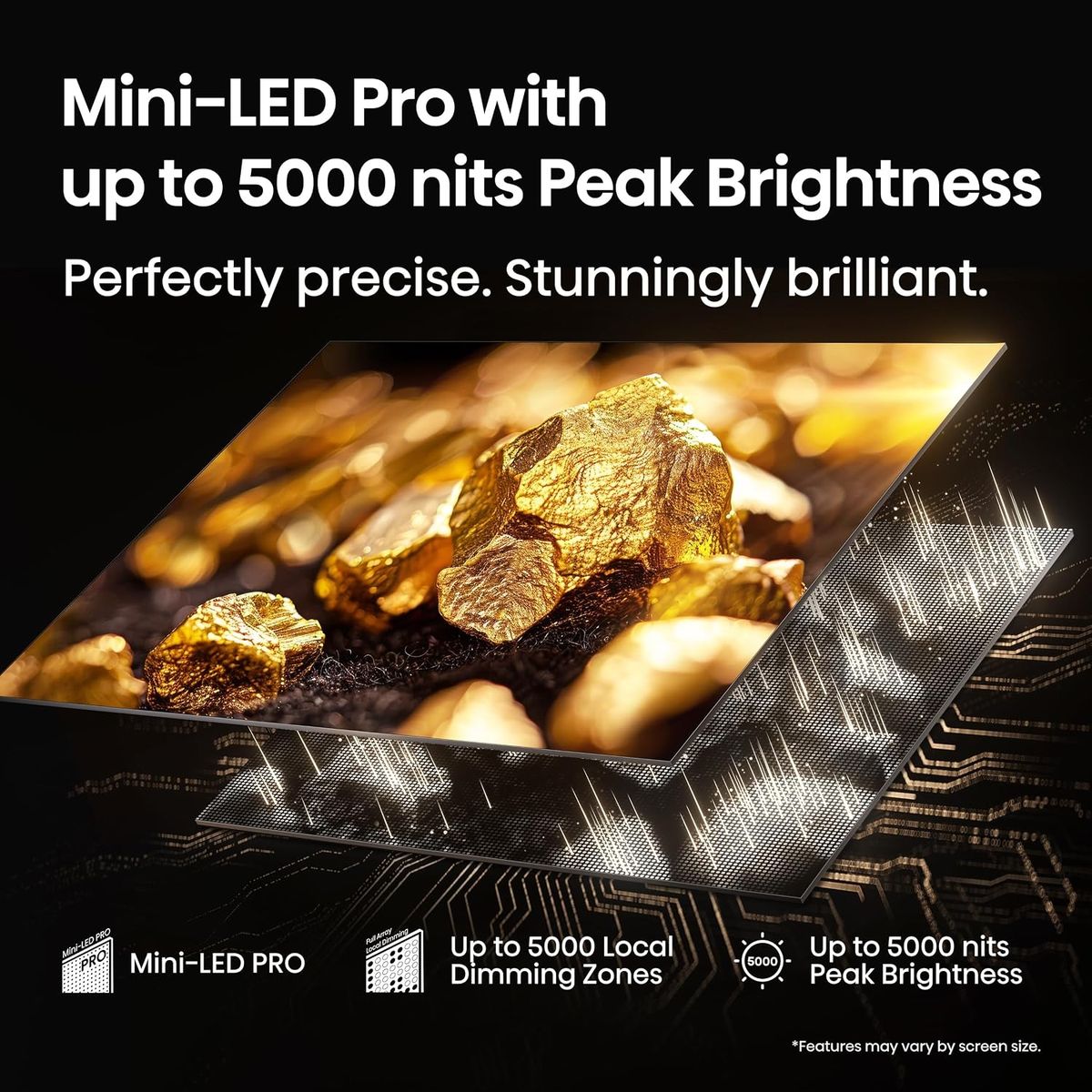
Most budget-friendly big-screen TVs use edge-lit backlights, which is a polite way of saying the light comes from the edges and bleeds into places it shouldn’t. Dark scenes look gray, bright objects get halos, and letterboxed movies suffer. The Hisense 85U8QG sidesteps that problem with Mini-LED technology and ULED backlighting, which means thousands of tiny LEDs sit directly behind the panel and dim in local zones. Hisense rates this set at up to LD5600 local dimming zones. In plain terms, that’s an unusually high zone count for this price bracket, and it translates to deeper blacks, cleaner contrast, and far less blooming around subtitles or bright highlights.
Peak brightness is rated at 5000 nits. That number matters because HDR content is mastered assuming a display can hit certain brightness thresholds. A TV that tops out around 500 nits will show you HDR in name only. At 5000 nits, this panel can actually reproduce the specular highlights, sunlight glints, and neon signage that make HDR look dramatic instead of flat.
Gaming Performance: The Numbers Most TVs Won’t Give You
If you’re plugging a console or PC into this thing, the spec list is where it separates itself from the pack:
- Native 165Hz refresh rate — not a “motion smoothing” trick, an actual panel refresh rate
- VRR 288 — variable refresh rate support up to 288Hz, which keeps frame pacing smooth and eliminates screen tearing
- QLED color layer — quantum dot film for wider color volume and better saturation at high brightness
- Low input lag — critical for competitive shooters and racing games
For comparison’s sake, plenty of TVs in this size class still cap out at 60Hz native. A 165Hz native panel with VRR is a genuinely different experience, especially in fast-paced titles where every frame counts. If you’re a casual viewer, this is nice-to-have. If you game at all, it’s the difference between “fine” and “responsive.”
Picture Quality Formats: HDR10+, Dolby Vision IQ, IMAX Enhanced
Format support is one of those things shoppers gloss over until they buy the wrong TV. Here’s the practical rundown:
- HDR10+ — dynamic metadata HDR used by Amazon Prime Video, some 4K Blu-rays, and select streaming apps
- Dolby Vision IQ — Dolby’s premium HDR format with ambient light adjustment, widely supported on Netflix, Disney+, and Apple TV+
- IMAX Enhanced — expanded aspect ratio and remastered picture profiles on compatible content
Having all three means you’re not locked out of any major streaming platform’s best picture mode. That’s a bigger deal than it sounds, because some brands pick one camp and ignore the other.
Audio: 4.1.2 Channel Built In
Most TVs ship with speakers that sound like a laptop from 2011. The Hisense 85U8QG includes a 4.1.2 channel audio system with Dolby Atmos support. The “.2” refers to upward-firing drivers that bounce sound off your ceiling, creating a height channel for overhead effects. In practice, that means you get a sense of vertical space in movies without immediately needing to budget for a soundbar.
Is it going to replace a dedicated 5.1.4 surround system? No. Is it dramatically better than the tinny downward-firing speakers on most competitors? Absolutely. For a bedroom, living room, or apartment setup where a full receiver-and-speakers arrangement isn’t practical, this is a real advantage.
Smart Features and the Google TV Platform
Google TV is the operating system here, which means you get a unified interface that pulls content from multiple streaming apps into a single watchlist, plus built-in Chromecast, voice search via the remote, and broad app support. From a reliability standpoint, Google TV has matured significantly over the past few years and receives regular updates. It’s also easier to navigate than some proprietary smart TV interfaces that shall remain nameless.
Connectivity is standard fare for a premium set: multiple HDMI inputs (including HDMI 2.1 for 4K/120Hz gaming), USB ports, Ethernet, and Wi-Fi. If you’re wiring a home theater or gaming setup, you’ll have enough ports without immediately needing a switcher.
Who Should Actually Buy This
Here’s my honest take for shoppers comparing options:
- Buy it if you want a massive 85-inch screen with genuine HDR performance, high-refresh gaming, and built-in Atmos audio without paying flagship OLED prices
- Consider alternatives if you need perfect off-axis viewing angles (OLED still wins there) or you’re in a room where 5000 nits of brightness would be overkill
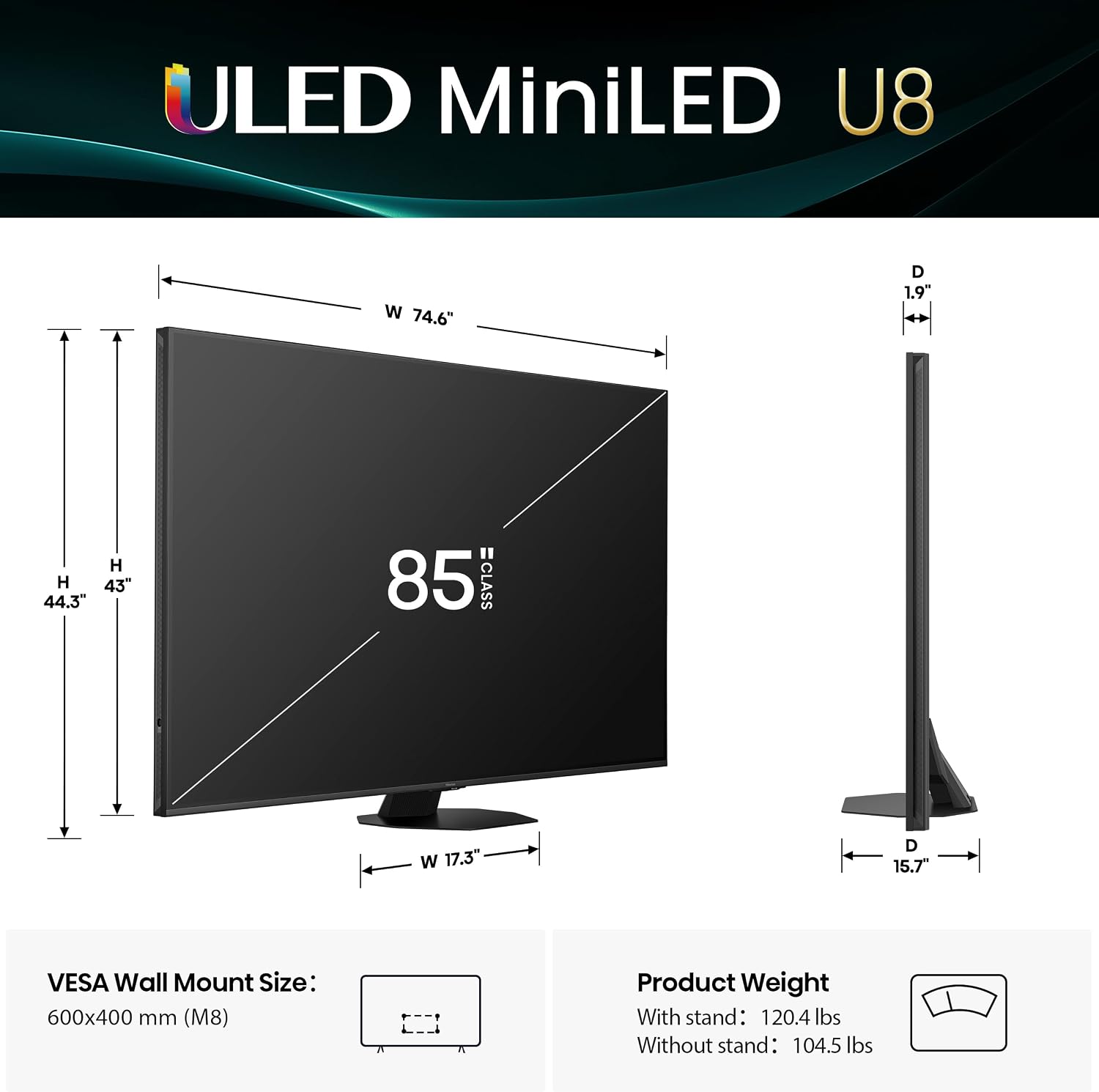
- Skip it if your seating distance is under eight feet — at that range, 85 inches is overwhelming
For most buyers with a normal living room layout, this size-to-performance ratio is hard to beat. The spec sheet reads like a TV that costs considerably more, and the feature set covers the major bases: picture, gaming, audio, and smart platform.
The Bottom Line
I recommend hardware based on whether it does what it claims, holds up over time, and doesn’t force compromises you’ll regret in two years. The Hisense 85″ U8 Series ULED Mini-LED 4K UHD Smart Google TV (85U8QG) checks those boxes. Mini-LED backlighting with up to LD5600 zones, 5000 nits peak brightness, native 165Hz with VRR 288, full HDR format support, and a 4.1.2 channel Atmos audio system — that’s a serious hardware package. If you’ve been waiting for a large-format TV that doesn’t require a second mortgage, this is the one to put on your shortlist.
Check current pricing and availability before you commit — deals on this model move quickly.